With HBO’s The Last of Us celebrating the three-year anniversary of its premiere on January 15, 2026, The Last of Us season 3 is finally starting to take shape. Abby actor Kaitlyn Dever is moving from supporting player to central lead as cameras begin to line up for the next chapter of the hit zombie show.
Dever says she is “getting mentally and physically prepped right now” and will head to Vancouver within days to start work on the new season, calling it “a much bigger role in the season” than she had in season 2. Her comments come from a recent interview tied to the show’s ramp-up toward production.
Production timeline: Vancouver shoot and a long road to 2027
Production on The Last of Us season 3 is described as starting “very soon,” with Dever expected to travel to Vancouver, Canada, to begin prep before filming. Industry listings on ProductionList.com currently mark April 1, 2026, as a tentative start date for the shoot, while other outlets have floated an early March kickoff and a schedule that stretches almost to the end of 2026.
Those dates line up with the bigger-picture view that season 3 is unlikely to arrive on HBO before 2027. Reports describe production lasting for most of 2026, making a 2027 release the realistic target and pushing expectations toward a summer or late-2027 debut if filming really does continue through the end of the year.
Writers also point out that it has been almost a year since the season 2 premiere, so the gap between seasons will not be unprecedented. Still, for viewers eager to see Abby’s perspective play out, the wait will feel long, especially when compared to The Walking Dead, which famously cranked out roughly one season a year for about a decade on AMC.
Abby takes center stage in The Last of Us season 3
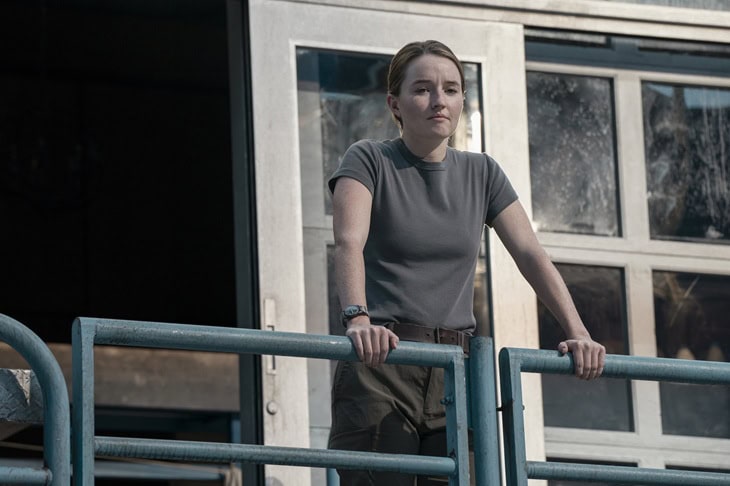
Kaitlyn Dever, The Last of Us, Season 2 – Episode 7
The creative team is treating season 3 as the payoff to a long-planned structural gamble. The first season translated the roughly 14-hour first Last of Us game into nine episodes. The shorter, seven-episode second season then tackled only about the first 40–45% of the 23-hour The Last of Us Part II, charting Ellie’s descent into darkness and vengeance.
The new season is expected to translate all, or almost all, of the remaining story from The Last of Us Part II. That means following Abby’s “Days 1–3” in Seattle and leaning into her journey of redemption, just as the game did when it shifted the player from Ellie’s point of view into Abby’s skin.
Dever has made it clear that she embraces that shift. She has said that “the shifting perspective onto Abby” will give fans more context for the character’s history and choices, and that she is excited for viewers to see how the show goes back in time with this run. In other words, the series is preparing to make Abby not just understandable, but essential.
In the game, that pivot was famously divisive. Creator Neil Druckmann forces players to inhabit the person they have been conditioned to hate, an approach some critics have described as “borderline torturous” but ultimately powerful as sympathies evolve. On television, that same structure—ending season 2 on Abby and then rewinding to her side of the story in season 3—sets up an emotionally loaded rematch with Ellie once the dual timelines snap back together.
Analysis: Framing season 3 around Abby also lets the series interrogate its own violence. By taking viewers inside the life of Joel’s killer, the show can historicize familiar events from season 2, confront fan anger head-on, and move toward a more complicated vision of justice and forgiveness than a straightforward revenge story would allow.
Cast and creative team for The Last of Us season 3
At the center of all of this is Kaitlyn Dever, the Booksmart star who now anchors HBO’s video game adaptation as Abby. Her performance joins an ensemble built around Bella Ramsey’s Ellie and the lingering memory of Pedro Pascal’s Joel, whose murder in season 2 still drives both women’s choices heading into season 3.
- Kaitlyn Dever as Abby, now the primary point-of-view character in season 3.
- Bella Ramsey as Ellie, whose hunt for Joel’s killer defined much of season 2.
- Pedro Pascal as Joel, whose death continues to shape Ellie and Abby’s stories in flashbacks and memory.
Behind the camera, there has been a quiet but significant shake-up. Game co-creator and former co-showrunner Neil Druckmann has mostly stepped away from the series, as has executive producer and writer Halley Gross, who helped co-write The Last of Us Part II. Craig Mazin now serves as sole showrunner, giving him full responsibility for steering the HBO series through this Abby-centric stretch.
Druckmann remains involved with the franchise as a whole while focusing more of his energy on Naughty Dog’s future projects, including the sci-fi game Intergalactic: The Heretic Prophet. That shift leaves Mazin to bridge the gap between the original PlayStation narrative and prestige-TV storytelling, even as the show moves toward material that does not yet have a third game to mirror.
How far the adaptation has come
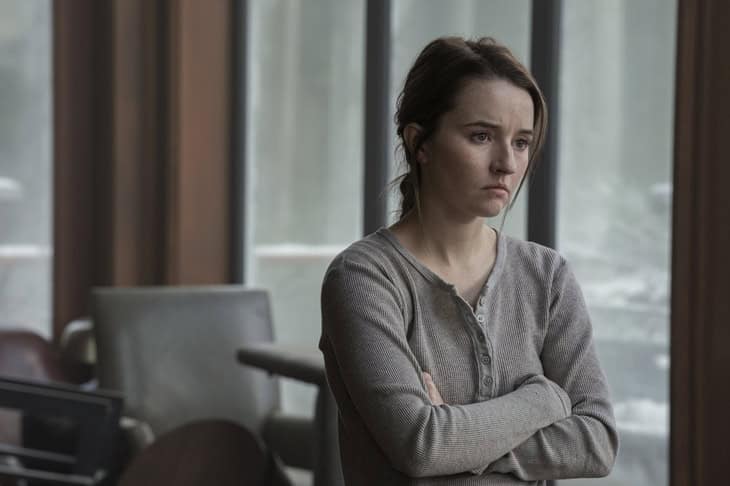
Kaitlyn Dever, The Last of Us, Season 2 – Episode 2
Looking back, the series has already covered a remarkable amount of ground. Season 1 condensed a roughly 14-hour game into nine episodes without losing its emotional core. Season 2, at seven episodes, covered only 40–45% of a much larger, 23-hour sequel, deliberately stopping just as Abby and Ellie’s stories collided.
Season 3 is positioned as the counterpart to that choice. By devoting an entire run to Abby’s “Days 1–3” in Seattle and to the people in her orbit, the show can fill in everything Ellie did not see in season 2. That is particularly important after the finale cliffhanger, which left Abby and Ellie in a tense standoff with the outcome unresolved.
HBO has not yet announced whether the third season will be the last for the series. That uncertainty adds extra weight to season 3: if it is the final chapter, it will need to provide closure not just for Abby and Ellie, but for the broader questions about cycles of violence and grief that have run through the story since Joel first smuggled Ellie out of the Boston quarantine zone.
What’s next for The Last of Us season 3
For now, the immediate future of The Last of Us season 3 is all about preparation. Dever is training for the physical demands of Abby’s storyline and heading to Vancouver as production ramps up in spring 2026. Filming is expected to run for much of the year, with dates like April 1, 2026, and an early-March start window circulating as guideposts rather than hard confirmations.
On the release side, every sign points toward 2027. Dark Horizons has already framed the season as “expected to air in 2027,” while other reporting leans toward a summer or late-2027 window once months of post-production are factored in. That means fans will likely go two full years between seasons 2 and 3.
Analysis: A gap that long is risky, but it also gives Mazin and his team more time to refine the Abby-focused structure, ground the action-heavy Seattle arc in strong performances, and make the eventual Ellie–Abby confrontation feel as devastating on television as it did on the PlayStation 4 and PlayStation 5.
However the schedule lands, the shape of the story is clear. With Kaitlyn Dever stepping into the spotlight, Craig Mazin running the show solo, and the last half of The Last of Us Part II still to adapt, The Last of Us season 3 looks set to be the most divisive—and potentially the most rewarding—chapter yet.

With a collective experience in film analysis and entertainment journalism, our team, comprised of avid movie buffs, has always been on the frontline of exploring cinematic universes, from the enchanting realms of Disney to the action-packed scenes of the MCU.
Our passion has led us to exclusive interviews with notable figures, early access, and active participation in the industry.
Recognized by the press, we dive deep into various genres, including drama, cartoons, comedy, and foreign films, always eager to bring fresh insights to our readers.
Connect with us or explore our journey to learn more about our adventures in unraveling the magic of the big screen.