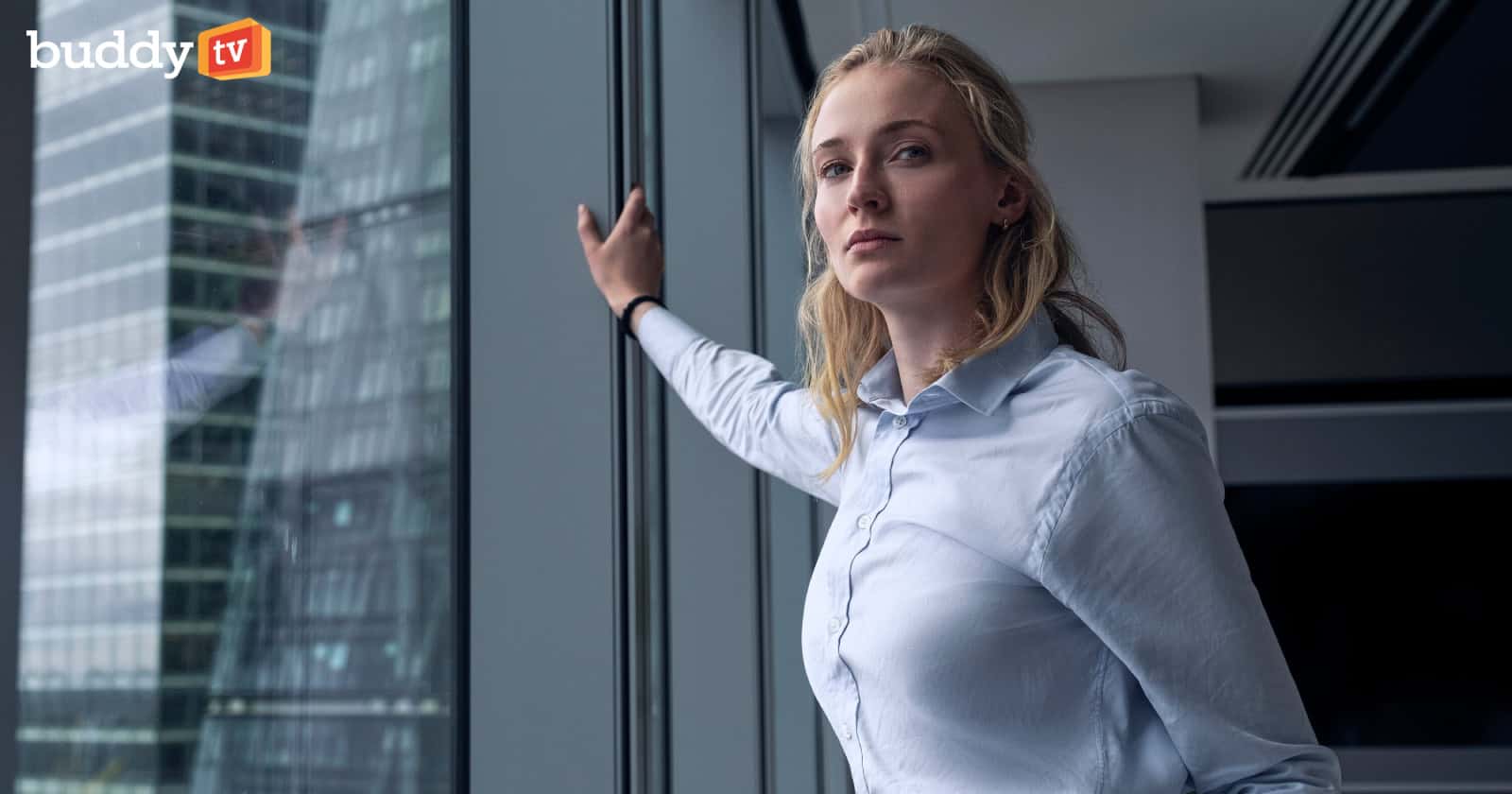
With Steal, Prime Video hands Sophie Turner a six-part, six-episode limited-series heist thriller and lets her run with it. Early Steal reviews describe the show as a “breathless and hugely entertaining” financial caper and a “stylish but convoluted” crime drama anchored by Turner’s lead turn as Zara Dunne, a chaotic trade-processing worker at London firm Lochmill Capital. Dropping in full on Wednesday, January 21, 2026, the Steal TV series asks a blunt question: what happens when a twentysomething office worker is thrown into the heist of the century and discovers she may not be as innocent as she seems?
The critical conversation formed quickly. Lucy Mangan’s television review framed Steal as “a clever meditation on the evil of money,” published and later updated at 12:21 EST the same day. Los Angeles Times writer Emily Zemler debuted an 11-minute read built around a London sit-down with Turner. Celebrity site Just Jared was running the headline “STEAL Reviews: What Critics Are Saying About Sophie Turner’s Prime Video Thriller TV Show,” calling the show a “contemporary, high-octane thriller” and teasing “the heist of the century” around an “ordinary office worker, Zara (Sophie Turner).” One day earlier, on January 20, 2026, Richard Roeper filed a four-minute review for RogerEbert.com, positioning Turner as the main reason to press play.
What the Steal TV series is about
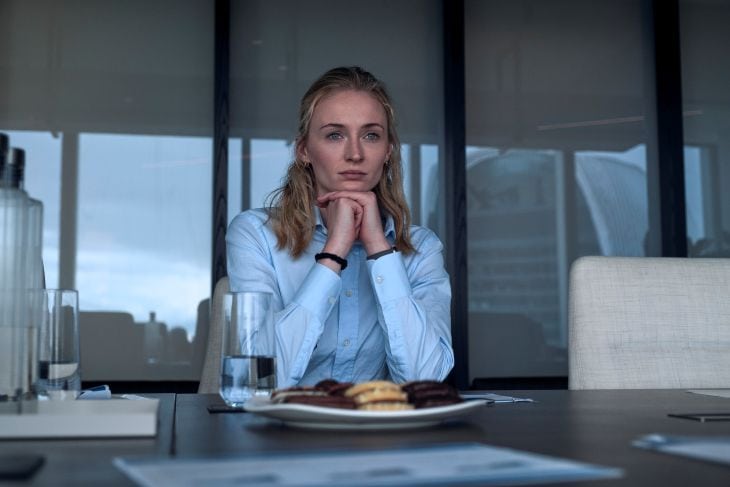
On paper, Steal is a high-gloss financial thriller; in practice, it is a story about people who feel stuck. When we meet Zara Dunne, she is a low-rung member of the trade-processing team at Lochmill Capital in London, drifting through a dead-end job and navigating visits with her alcoholic and volatile mother, Haley. On the trades processing floor, Zara tells her new underling Myrtle that the trick to surviving your first job is not dwelling on the fact that “every day that passes is another day wasted” and knowing where the good biscuits are – in this case, chocolate Hobnobs. Myrtle, whose parents saddled her with an “odd” moniker, already feels like the stuffing has been knocked out of her.
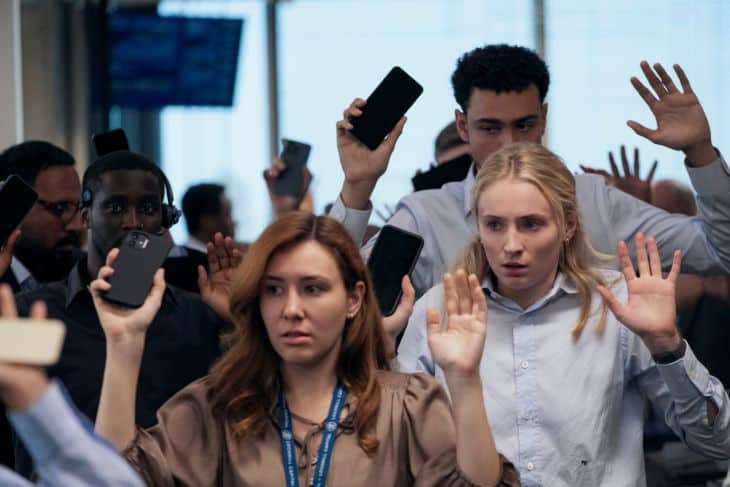
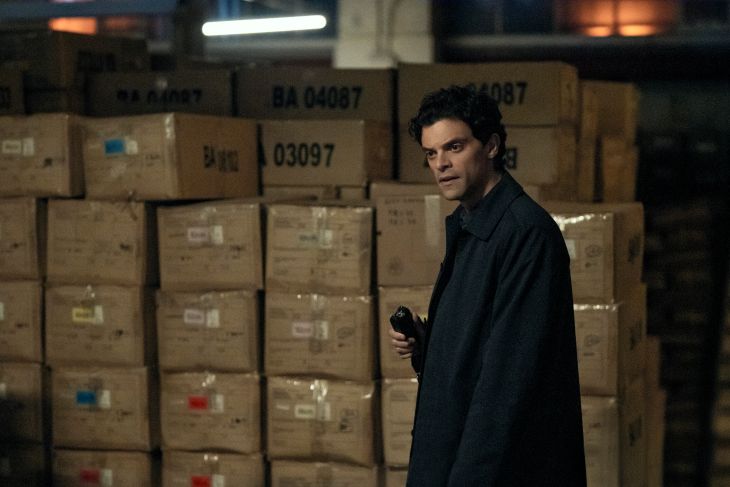
Before anyone can settle into another wasted day, a team of armed villains swarms the floor. The gang arrives in shades of black and gray, the kind of well-dressed robbers Roeper says could walk in from a greatest-hits montage of modern streaming thrillers. They wear fingerprint-masking rubber gloves, carry automatic weapons, and deploy phone jammers. Rather than simple ski masks, they use sophisticated, subtle prosthetics designed to beat the facial-recognition software that police will later apply to Lochmill Capital’s CCTV footage.
Zara (Sophie Turner), Myrtle (Eloise Thomas), Zara’s fidgety best pal and colleague Luke (Archie Madekwe), and the rest of the rank-and-file are herded into a conference room while the management committee is locked in another. After a couple of gruesome beatings to underline their seriousness, the gang yanks Luke and Zara back out and forces them to execute a series of trades worth £4bn – £4 billion in pension funds belonging to working-class and middle-class savers. The management committee signs off on everything, a detail that dovetails with Mangan’s argument that the show is also about concentration of wealth: executives sit on £1m a year, plus guaranteed bonuses, while Zara and Luke scrape by on a fraction.
In the immediate aftermath of the hi-tech heist, the thieves vanish, the heist is branded “the heist of the century” in promotional copy, and Zara is hailed as a hero. But the closing moments of the opening hour pull the rug: publicity around the show and the first episode’s final twist reveal that Zara was in on it. Or was she? As the police investigation begins, layers of deceit and shifting alliances emerge, and the story expands into something closer to a conspiracy thriller than a straight bank job.
Cast and characters: who’s who in Steal
- Sophie Turner as Zara Dunne: Zara is a trade-processing worker at Lochmill Capital, a cool-looking London office drone whose reality is much messier. Roeper notes that she is first seen “stuck in the loo, with a nosebleed” after yet another hungover night. Her survival instincts, rooted in an upbringing with her alcoholic, volatile mother Haley, turn her into what Mangan calls “a cornered terrier rather than a superhero,” and you “long for her to triumph” as the story pushes her into morally dubious territory.
- Archie Madekwe as Luke: Luke is Zara’s friend and co-worker, a jittery presence on the trades floor. In Steal, he is forced alongside Zara to push through the trades that empty out £4bn in pensions. Mangan describes Luke as “hopelessly broken” by events, while Roeper notes that he is Zara’s “fidgety best pal,” played by an actor viewers may recognize from Midsommar and Saltburn.
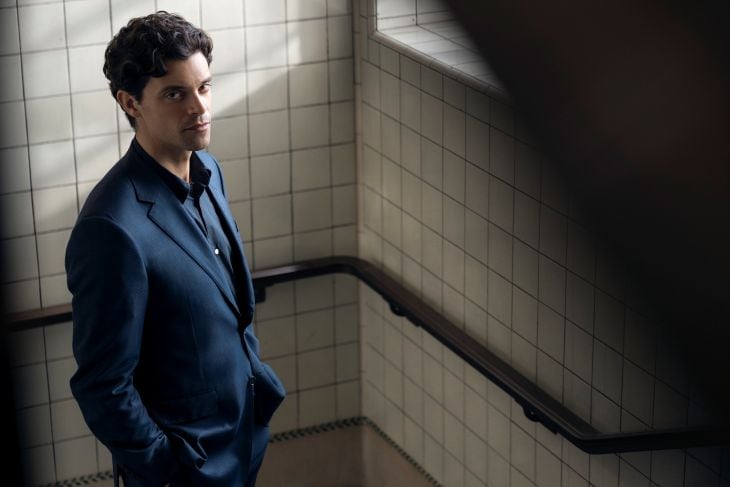
- Jacob Fortune-Lloyd as DCI Rhys Kovac / Rhys Covac: Once the bullets stop flying, the investigation falls to Detective Chief Inspector Rhys Kovac (spelled “Rhys Covac” in Roeper’s review), played by Jacob Fortune-Lloyd. He is introduced as an astute detective with secrets of his own. As he becomes Zara’s ad-hoc partner in solving the crime, the trail winds through MI5, a powerful and corrupt billionaire, and various state-level interests. At one point, investigators speculate that the job may have been pulled off by “Ex-Army [or] ex-Special Services [or] maybe state actors.”
- Charles Mnene as Yorkshire: One of the most striking images in Mangan’s review shows Yorkshire (Charles Mnene) looming with a machine gun behind Zara. Captioned “Cornered terrier … Yorkshire (Charles Mnene) and Zara (Sophie Turner) in Steal,” the shot comes from photographer Ludovic Robert for Prime Video, underscoring how physically trapped Zara is by the crew.
- Eloise Thomas as Myrtle: Myrtle is Zara’s new underling, a twentysomething who arrives at Lochmill Capital already weighed down by a name that draws mockery from peers. As Tara shows her around the trades floor and jokes about biscuits, Myrtle becomes another ordinary worker swept into the extraordinary heist.
- Anastasia Hille as Haley: In Zara’s home life, Haley (played by Anastasia Hille) is an alcoholic and volatile mother. Mangan singles out their scenes as so emotionally brutal that she “would gladly watch a purely domestic drama just about them.” These moments, combined with the show’s focus on financial injustice, feed into the question of how far circumstance pushes people toward crime.
- Andrew Howard as Sniper: Among the heist crew, Sniper (Andrew Howard) stands out as a brutish, hot-headed thug. Roeper argues that he is “such a violent idiot” that it is almost comical to imagine him navigating a cold wallet, one of the many ways the show leans into genre archetypes.
- Jonathan Slinger as the mastermind: The unnamed mastermind played by Jonathan Slinger initially seems intriguing, but Roeper criticizes how often he is sidelined in favor of Sniper and a crew that feels underwritten.
- The rest of the heist team: Roeper notes that the crew members are so thinly sketched that IMDb lists them only as “London,” “Tall,” “Glasses,” “Burly,” and similar descriptors, a deliberate jab at the show’s tendency to rely on types rather than complex villains.
Behind the camera, Steal marks the debut television screenplay from writer Sotiris Nikias, who previously honed his craft in crime novels under the pen name Ray Celestin. The series is directed by Sam Miller, whose own conversation with Turner helped lock in the project’s central theme: “What makes good people do bad things?”
Sophie Turner on messy women, notebooks, and moving from Sansa Stark to Zara

In a London interview conducted by Emily Zemler for the Los Angeles Times, Turner is clear about what drew her to Zara and Steal. “Easy women are boring,” she says, explaining that she wants “nuanced, layered characters” who change over time. For her, women “at their rawest and most vulnerable” are “quite liberating to play.”
Turner, 29 at the time of the interview, was speaking from her publicist’s office in London, days away from starting work on Prime Video’s forthcoming Tomb Raider series, where she will play Lara Croft. She had spent the past year building muscle for that role, even as she filmed Steal in 2024 after moving back to England following her messy divorce from pop star Joe Jonas. She jokes that her take on Lara Croft is not a cartoon “sex bombshell” and that there will be no pointy-boobed armor; the new Tomb Raider is meant to feel more grounded.
Zemler’s piece reveals that Turner shot most of Steal in London, with the Lochmill Capital interior built as a set while many other scenes were filmed on recognizable city streets, often in the dead of summer during boiling-hot studio days and late-night location shoots. Turner is rare among actors in admitting that she loves night shoots, comparing them to “when you’re a kid” going to school at night for parents’ evening – it feels like you should not be there, which makes it feel “a bit naughty.”
Her collaboration with Archie Madekwe started serendipitously. Before production, Turner was on vacation in Capri when Madekwe texted to say someone had spotted her nearby; he was, in fact, on a beach a two-minute walk away. The two ended up spending a holiday together and arrived on set “already best friends.” Madekwe says they developed a “very real friendship,” which helped them through long days in that boiling studio. He calls Turner “the dream No. 1 on the call sheet,” praising her habit of greeting everyone, remembering names, and creating a happy working environment.
Turner’s process on Zara is meticulous. She builds dense backstories for her characters and keeps notebooks filled with details that no one else sees. For Zara, she wrote out school history and the psychological reasons why Haley drinks so much, then expanded those notes into journals written from Zara’s perspective at ages 12 and 25. “It’s nice to have little secrets about the character that the audience doesn’t know and the directors don’t know,” she explains; those secrets create extra layers and nuance.
That habit was not in place when she first played Sansa Stark on Game of Thrones. Cast at 13, Turner spent eight seasons growing up on the HBO epic, acting through some of the series’ most difficult scenes, including a rape storyline. She recalls telling her mother at 11, “I really need to break into the industry as a child because I think it will be easier to stay there,” and that the Game of Thrones audition “smacked” her in the face in the best possible way. Since the show ended in 2019, she has avoided the period-piece offers that followed, in part because she hates filming in mud and flimsy cotton dresses; she jokes that when you go to the bathroom on a muddy set, the hem of your dress slaps your backside.
Her post-Westeros résumé has been eclectic: Marvel superhero Jean Grey in X-Men: Apocalypse and Dark Phoenix, real-life jewel thief Joan Hannington in the limited series Joan, an actor fighting through a home invasion in last year’s thriller Trust, and a role in an upcoming film called The Dreadful. Steal slots into that arc as another exploration of women under pressure – this time framed by markets, MI5, and cryptowallets instead of dragons and telepaths.
Turner emphasizes that she does not see Steal as a didactic sermon. The themes are there – “cost of living crisis,” “the wage gap,” and the scars of growing up in “an alcoholic, abusive living space” – but she insists they are “subtly played underneath the action and drama.” The show, she says, is “not too political,” offers “a bit of escapism,” and still feels like something that “could really happen.”
Themes: money, morality and the cold wallets of the 2020s

Mangan’s take that Steal is “a clever meditation on the evil of money” dovetails with Turner and Madekwe’s remarks about circumstance. The robbery empties out pensions that belong to working-class and middle-class people, while a management committee earning £1m a year plus guaranteed bonuses signs off on the trades. That gulf between those who feel the sting of the cost-of-living crisis and those insulated by wealth sits at the core of the show’s anger.
Roeper, writing for RogerEbert.com, underlines how the series turns otherwise dry financial jargon into threat. The plot, he argues, occasionally bogs down in exposition about “cold wallets,” which he memorably describes as “the floppy disks of 2020s spy thrillers.” Those cold wallets and cryptowallets are the key to hiding the £4bn, and their unsexy mechanics become part of the show’s texture: tedious enough to be realistic, yet dangerous enough to be lethal.
Both critics and cast return repeatedly to that overarching question from director Sam Miller’s early conversation with Turner: “What makes good people do bad things?” The answer in Steal lies in dead-end jobs, alcoholic parents, pay inequality, and a culture that treats money like a game while punishing those who lose. Archie Madekwe notes that “circumstance plays a huge role into people’s decision making” and that people can “have all of the best intentions” and still do something out of necessity without thinking through the ripple effects. Every betrayal in Steal comes freighted with that tension.
At the same time, Roeper argues that the villains themselves are less interesting than their circumstances. The heist crew, he says, lacks the dark charisma of comparable shows such as The Night Manager, Money Heist, Slow Horses, or The Terminal List, coming across instead like a group of generic toughs who have watched Die Hard too many times. That critique keeps Steal from being a flawless genre entry, but it also throws more focus back onto Zara and Rhys Kovac/Covac.
Release details and where to watch Steal
Steal is a six-episode limited series produced by Amazon Content Services LLC for Prime Video. The whole season was screened for review ahead of launch, and it premieres in full on Wednesday, January 21, 2026. The show is available to stream now on Prime Video (or Prime), with all six parts dropping at once rather than weekly.
Although Steal is billed as a limited series, Roeper notes that it “leaves open the possibility of a Season 2.” That comment is less a renewal scoop than an observation about how the finale concludes Zara’s arc while still leaving a few doors cracked open for additional “adventures” should Amazon decide the numbers justify them. Officially, though, viewers are getting a self-contained, six-hour story.
What Steal reviews tell us about this thriller
Taken together, the major Steal reviews paint a picture of a show that lives and dies by Sophie Turner. Mangan calls the series “breathless and hugely entertaining,” praising Turner as “a cornered terrier rather than a superhero” and confessing that you “long for her to triumph.” Roeper describes the show as “stylish but convoluted,” but also says “Turner is outstanding,” playing Zara as “an undeniably complex and empathetic character,” and concludes that if the creative team can give her “a better adventure,” “we’ll sign up.”
That consensus – that the plotting can be preposterous or jargon-heavy while the lead performance remains magnetic – may actually be the best possible outcome for a modern streaming thriller. The six-part structure allows Steal to binge cleanly; the London setting, with cinematography by Ludovic Robert, Samuel Dore’s still photography, and Jennifer McCord’s portraits, gives the show an elevated sheen; and the script from Sotiris Nikias, writing under his Ray Celestin crime-novelist pedigree, drives home how rigged the financial game can feel for people like Zara, Luke, Myrtle, and Haley.
From a BuddyTV perspective, Steal is worth your time if you are drawn to morally messy protagonists, contemporary themes like the wage gap and cost-of-living crisis, and the specific thrill of watching a former Sansa Stark reinvent herself yet again. It will not replace Money Heist or Slow Horses in the heist-thriller canon, and some viewers may share Roeper’s frustration with the thinly sketched criminals known only as “London,” “Tall,” “Glasses,” or “Burly.” But if you come for Sophie Turner – the Marvel alum who has gone from Jean Grey and Joan Hannington to Zara Dunne and soon Lara Croft – the Steal TV series delivers exactly what these early reviews promise.

With a collective experience in film analysis and entertainment journalism, our team, comprised of avid movie buffs, has always been on the frontline of exploring cinematic universes, from the enchanting realms of Disney to the action-packed scenes of the MCU.
Our passion has led us to exclusive interviews with notable figures, early access, and active participation in the industry.
Recognized by the press, we dive deep into various genres, including drama, cartoons, comedy, and foreign films, always eager to bring fresh insights to our readers.
Connect with us or explore our journey to learn more about our adventures in unraveling the magic of the big screen.