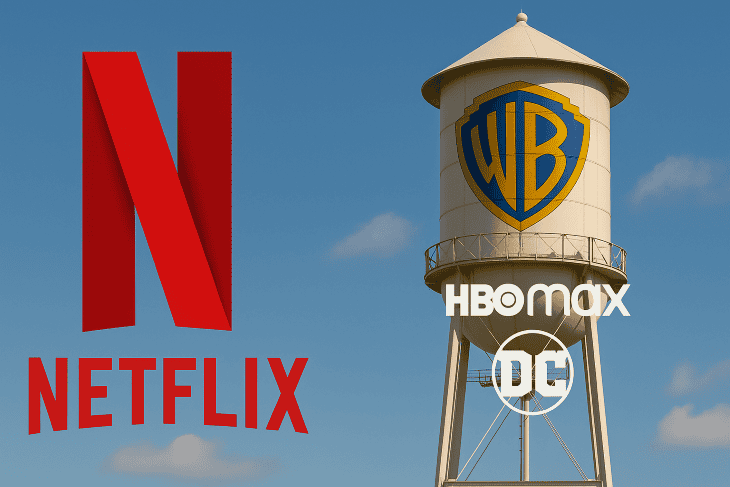
Netflix is set to acquire Warner Bros. Discovery’s film and television studio and its premium streaming businesses—including HBO, HBO Max, and DC Studios—in a cash‑and‑stock transaction valued at $72 billion in equity, or $82.7 billion including debt. The offer values Warner Bros. Discovery at $27.75 per share, with closing targeted in 12–18 months following a planned spin‑off of cable networks into a separate company, “Discovery Global,” expected to complete in Q3 2026.
Warner’s cable networks—including CNN, Discovery, and TNT Sports, plus digital brands such as Discovery+ and Bleacher Report—are excluded from the sale. The studio, HBO, HBO Max, Warner Bros. Television, Warner Bros. Motion Picture Group, and DC Studios will transfer to Netflix if regulators approve the deal.
What this means for theaters, HBO, and Netflix’s library
Netflix says it will honor Warner’s theatrical commitments for studio films and keep movies in theaters, while acknowledging that “windows will evolve.” Trade groups remain wary. Cinema United CEO Michael O’Leary warned the combination “poses an unprecedented threat to the global exhibition business,” adding: “Theaters will close, communities will suffer, jobs will be lost.”
Analyst Mike Proulx of Forrester described the merger’s potential to reshape streaming, saying it would “cement [Netflix] as the Goliath in the streaming industry,” and raised the open question of whether HBO Max and Netflix “stay as separate streaming services or combine into a mega streaming service.”
Key players & titles
- Ted Sarandos, Netflix co‑CEO: “Our mission has always been to entertain the world,” and merging with Warner will “give audiences more of what they love.”
- Greg Peters, Netflix co‑CEO, discussed potential bundling that could introduce HBO Max to Netflix subscribers.
- David Zaslav, Warner Bros. Discovery CEO: “For more than a century, Warner Bros. has thrilled audiences… By coming together with Netflix, we will ensure people everywhere will continue to enjoy the world’s most resonant stories for generations to come.”
- David Ellison (referenced via competing bids involving Paramount Skydance) figures into the backdrop of the sale process.
- Cinema United (trade association) and former WarnerMedia CEO Jason Kilar have voiced concerns about reduced industry competition.
The numbers: price, structure, and synergy targets
The consideration comprises roughly $23.25 in cash and about $4.50 in Netflix stock per WBD share. The agreement includes a $5.8 billion reverse breakup fee if Netflix walks away, and $2.8 billion if WBD terminates under specified conditions. Netflix projects $2–$3 billion in annual cost savings by year three post‑close.
The combined company would fold Warner’s franchises—Harry Potter, Game of Thrones, and DC’s Batman and Superman—into Netflix’s slate alongside Stranger Things, Bridgerton, and Squid Game. Recent content noted in coverage includes Frankenstein, the sing‑along event for KPop Demon Hunters, and the forthcoming Stranger Things series finale.
Antitrust and timing
Regulatory scrutiny in the U.S. and Europe is expected to be intense, with congressional critics already signaling concerns. Reuters notes that some unions and Hollywood figures oppose the deal, while analysts foresee a protracted review as Paramount Skydance continues to contest the process. Closing remains contingent on the Discovery Global spin‑off and standard approvals, pushing finalization into late 2026.
Market reaction: Netflix stock & WBD stock
At publication time, shares moved in opposite directions: WBD traded around the mid‑$20s while NFLX dipped modestly. Live quotes below update throughout the session.
What changes for subscribers?
The equity and enterprise values point to a content‑driven bet. If the deal closes, Netflix could offer a bundle that includes HBO Max or fold HBO into Netflix plans. Reuters reports executives are exploring both options. Any shift could affect pricing, ad tiers, and windowing across Netflix, HBO, HBO Max, and even licensed hits like Breaking Bad and Suits, which previously surged on Netflix.
FAQ: Who owns HBO and HBO Max after this?
Nothing changes immediately. Until closing, Warner Bros. Discovery continues to own and operate HBO and HBO Max. Post‑close, ownership of HBO, HBO Max, Warner Bros. Television, DC Studios, and Warner Bros. Motion Picture Group would shift to Netflix—subject to regulators. Cable networks (CNN, Discovery, TNT Sports) would sit in Discovery Global, a separate company.
Bottom line
The Netflix–Warner Bros. combination is designed to boost Netflix’s scale while preserving Warner’s theatrical pipeline. Whether services merge or bundle, the outcome will shape how audiences watch HBO, HBO Max, DC, and Warner Bros. films for years to come.

With a collective experience in film analysis and entertainment journalism, our team, comprised of avid movie buffs, has always been on the frontline of exploring cinematic universes, from the enchanting realms of Disney to the action-packed scenes of the MCU.
Our passion has led us to exclusive interviews with notable figures, early access, and active participation in the industry.
Recognized by the press, we dive deep into various genres, including drama, cartoons, comedy, and foreign films, always eager to bring fresh insights to our readers.
Connect with us or explore our journey to learn more about our adventures in unraveling the magic of the big screen.