“House of the Dragon” season 3 is supposed to be the explosive payoff fans were promised at the end of season 2. Instead, before a single frame has aired, the new run is already defined by a behind-the-scenes war between fantasy author George R. R. Martin and showrunner Ryan Condal, and by growing anxiety that the on-screen Dance of the Dragons may repeat the mistakes that drove some viewers to say, “I quit Game of Thrones because of the final season. There’s no way I’m watching another series set in that world.”
On January 15, 2026 at 2:46 PM EST, Esquire published a two-minute read bluntly headlined “House of the Dragon Season 3 Is Off to a Horrible Start,” written by Josh Rosenberg. In that piece, Martin describes his working relationship with Condal as “abysmal” and worries that changes made for the House of the Dragon season 2 finale in August 2024 will have “irreparable effects” on season 3. Season 2 teased “one of the franchise’s largest and most expensive battles yet,” then postponed it “to the beginning of season 3 due to budgeting constraints,” leaving fans instead with “a lot of characters dramatically staring at each other while promising that the most important fight of their lives was coming soon.”
Martin, who wrote Fire & Blood and every Game of Thrones novel in the A Song of Ice and Fire series and serves as an executive producer on House of the Dragon, even posted a since-removed blog rant complaining about changes Condal made to his source material. The anger in that blog hangs over House of the Dragon season 3 just as much as any dragon.
House of the Dragon Season 3 & the “Abysmal” Rift Between George R. R. Martin & Ryan Condal
The core of Martin’s frustration is creative control. “I hired Ryan,” he told The Hollywood Reporter in a profile quoted by Esquire. “I thought Ryan and I were partners. And we were all through the first season [of House of the Dragon]. I would read early drafts of the scripts. I would give notes. He would change some things. It was working really well — I thought.”
That changed after season 1. Condal’s co-showrunner Miguel Sapochnik departed following unknown disagreements with HBO, leaving Condal as sole showrunner. From that point on, Martin says Condal “basically stopped listening to me.” In Martin’s version of events, “I would give notes, and nothing would happen.” Eventually, during a meeting about House of the Dragon season 3, the author hit a breaking point and declared, “This is not my story any longer.” The writer now flatly calls his relationship with Condal “abysmal,” even as HBO keeps both men attached to the show.
Martin also objects to how season 2 altered the structure of Fire & Blood. He’s particularly unhappy that “season 2 often combined multiple characters into one character,” a tactic Game of Thrones itself used to simplify sprawling narrative threads. In his since-deleted rant, he argued that these changes would distort the Dance of the Dragons beyond recognition by the time House of the Dragon season 3 arrives, especially around the huge naval clash known as the Battle of the Gullet.
Yet whenever he threatens to walk away, Martin comes back. When The Hollywood Reporter asked why he agreed to work on season 3 again after clashing with Condal, he answered only, “I can’t talk about it.” That cryptic line—“I can’t talk about it”—is almost as ominous for House of the Dragon season 3 as any prophecy in Old Valyria.
Esquire’s report is framed by images from Gerald Matzka and Getty Images, and it sits within Esquire’s wider entertainment ecosystem—alongside coverage of House of the Dragon, A Knight of the Seven Kingdoms, and pieces like “George R. R. Martin Has a ‘Winds of Winter’ Update,” “Don’t Miss ‘A Knight of the Seven Kingdoms’,” “ ‘A Knight of the Seven Kingdoms’ Is a Total Blast,” and even political analysis such as “Trump’s Latest Attack on Our Civil Liberties.” That context underscores how Martin, Condal, HBO, and House of the Dragon season 3 are now part of a broader media conversation about spectacle, authorship, and IP-driven television.
What House of the Dragon Season 3 Needs to Deliver On-Screen
For all the focus on the feud, House of the Dragon season 3 still lives or dies by what appears on screen. The season 2 finale in August 2024 pushed a massive sea battle—the Battle of the Gullet—into this new run. Within Martin’s own chronology, that fight is part of the Targaryen civil war known as the Dance of the Dragons, which takes place about 72 years before the events of Game of Thrones. In that conflict, approximately 20 dragons were ridden into battle and only four survived. Just 20 years after the House of the Dragon storyline, all of them would become extinct. That’s why, as one breakdown notes, anyone hoping for constant “fire breathing action” in earlier prequels is told they “will have to wait for House of the Dragons season 3.”
The same breakdown recalls that the original budget for each episode of Game of Thrones was six million dollars. For a pivotal hour like “Blackwater,” HBO had to “cough up another 2 million.” With Condal now promising that House of the Dragon season 3 will be even bigger in scale than season 2, the series may again need HBO to “pry open its wallets once again.” The likely set-pieces include the Battle of the Gullet, the Battle of Redbrook, and the first battle of Tumbleton—three clashes that, in the books, decisively transform the Dance of the Dragons.
On his own genre-collectibles podcast, Condal sounded genuinely awed by the size of the production. “Every day I walk around there and look at the buildings and what we’re building and the things that we’re doing and the number of costumes and extras and all that,” he said, adding that he “knew it was bigger than season 2, but I don’t think I realized by quite how much.” Given “the amount of time, talent, and resources that were poured into season 2,” the same breakdown says, it’s hard not to imagine just how massive House of the Dragon season 3 could become.
Analysis: The danger, as articulated by many critical fans, is that “bigger” again becomes the only metric of success. In the final stretch of Game of Thrones, “any character that wasn’t critical got killed off without a second thought,” major players “suffered no real consequences” despite that ominous “winter is coming” tagline, and the plot felt “clearly rushed, cramming into a few episodes what should have taken around a season.” If House of the Dragon season 3 spends its increased budget on scale without grounding each death and betrayal in character, it risks repeating exactly what soured viewers on Westeros the first time.
A Knight of the Seven Kingdoms vs. House of the Dragon Season 3
Credit: HBO
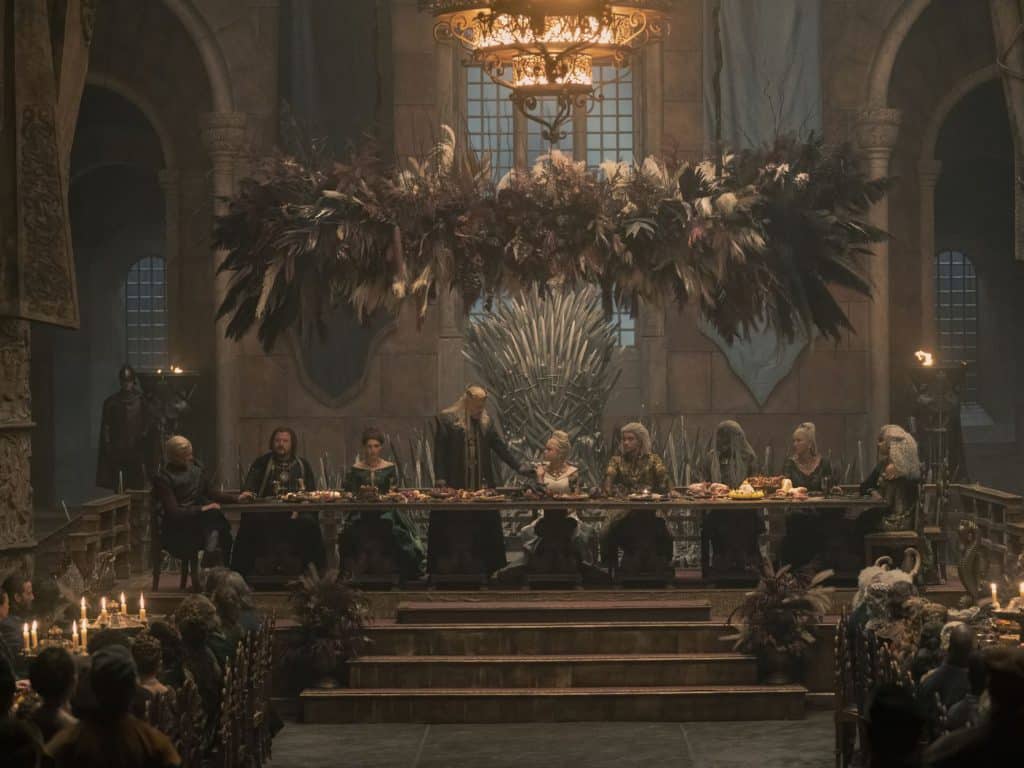
HBO’s new prequel A Knight of the Seven Kingdoms—often mis-heard or transcribed as A Night of the Seven Kingdoms—is being positioned as a kind of corrective. The series adapts George R. R. Martin’s beloved “Dunk and Egg” novellas, sometimes labeled “Dunk and Egg Explained” in fan breakdowns, and is set roughly a hundred years before Game of Thrones on the Targaryen timeline. One handy mnemonic described on-screen goes like this: House of the Dragon takes place about “100ish years” earlier than Game of Thrones, then Tales of Dunk and Egg unfolds another hundred years before that.
The official logline for the new show introduces its hero this way: “A young naïve but courageous knight, Sir Duncan the Tall and his squire, Egg,” set out in an age “when the Targaryen line still holds the Iron Throne, and the memory of the last dragon has not yet passed from living memory.” The story promises that “Great destinies, powerful foes, and dangerous exploits all await these improbable and incomparable friends.”
Irish actor Peter Cloffy stars as Donk—a transcription of Dunk—a squire to a hedge knight, “a wandering defender of the realm unbound by commitment to any specific house or lord.” When his hedge knight, Sir Arlland of Penny Tree, dies, Dunc (or Dunk) decides to ride to the tourney at Ashford Meadow with “nothing but a wooden shield and a rope repurposed as a sword hilt.” There, he meets Egg, a young boy who will change his life and the Targaryen dynasty’s future.
Season 1 of A Knight of the Seven Kingdoms will run just six episodes total and adapt the first novella from the Tales of Duncan Egg collection, titled The Hedge Knight. Compared to Fire & Blood and the main A Song of Ice and Fire cycle, the Dunk and Egg stories have “smaller stakes,” a “comparatively lighter” tone, and a clear focus on two protagonists rather than a giant ensemble. That makes them, in one narrator’s phrase, “a relatively easy entry point” for viewers who loved Westeros but felt burned by the end of Game of Thrones.
One line late in the breakdown neatly captures the appeal: “And so far, it’s off to a great start.” With an “87% on Rotten Tomatoes,” critics seem to think that A Knight of the Seven Kingdoms has “finally accomplished what Game of Thrones and House of the Dragon should have done years ago” by putting fully realized characters ahead of sheer scale.
Cast and Creators: From George R. R. Martin and Ryan Condal to Peter Cloffy and Egg
Any complete picture of House of the Dragon season 3 has to track the overlapping creative teams and characters across HBO’s Westeros projects:
- George R. R. Martin – Fantasy author, creator of A Song of Ice and Fire, writer of Fire & Blood, and executive producer on House of the Dragon. He conceived both the Dance of the Dragons and the Dunk and Egg stories that fuel House of the Dragon season 3 and A Knight of the Seven Kingdoms.
- Ryan Condal – House of the Dragon’s showrunner, once Martin’s partner on season 1. After Miguel Sapochnik left, Condal became sole showrunner and, in Martin’s words, “basically stopped listening to me,” leading to an “abysmal” working relationship heading into season 3.
- Miguel Sapochnik – Co-showrunner throughout House of the Dragon season 1 and the director behind some of Game of Thrones’ most famous battles. He departed after “unknown disagreements with HBO,” but his approach to action still looms over House of the Dragon season 3’s Battle of the Gullet, the Battle of Redbrook, and the first battle of Tumbleton.
- Sir Duncan the Tall (“Dunc”/“Dunk”/“Donk”) and Egg – The core duo of A Knight of the Seven Kingdoms. Dunc is “a young naïve but courageous knight,” while Egg is his sharp-tongued squire. Together they embody the more intimate, character-focused direction some critics want from future Westeros stories.
- Irish actor Peter Cloffy – Stars as Donk, a squire to the hedge knight Sir Arlland of Penny Tree. His wandering life at places like Ashford Meadow shows Westeros from the ground level rather than the Iron Throne.
- Sir Arlland of Penny Tree – The hedge knight whose death propels Dunc into competing at the Ashford Meadow tourney, setting the events of The Hedge Knight in motion.
- Ramen Jawadi – The transcript uses this spelling for composer Ramin Djawadi, whose music shaped the “big and epic and incredible” title sequences of both Game of Thrones and House of the Dragon. His “orchestral and large and beautiful” score contrasts with the simpler tone sought for the Dunk and Egg prequel.
- Ira Parker – Former House of the Dragon writer and co-creator of A Knight of the Seven Kingdoms. Speaking to Entertainment Weekly, Parker said, “All decisions came down to Dunk,” describing how he tried “to channel the type of person he is into every aspect of this show, even the title sequence.”
Parker’s comments highlight just how different the goals are across the franchise. “The title sequences of the original Game of Thrones and House of the Dragon are big and epic and incredible,” he said. “Ramen Jawadi’s score is orchestral and large and beautiful and that’s not really Dunk’s MMO. He’s plain and he’s simple and he’s to the point. He doesn’t have a lot of flash to him.” It’s a mission statement for an entire branch of HBO’s Westeros strategy.
Media, Memberships, and the Ecosystem Around House of the Dragon Season 3
Esquire’s House of the Dragon season 3 coverage also exists within a dense media ecosystem. The article appears in the Entertainment > TV channel, alongside verticals like What to Buy, Style, Food, Drinks, Sports, Lifestyle, News and Politics, and Member Exclusives. Readers see navigation into TV, Movies, Books, Music, Mavericks of Hollywood, Best of 2025, and Cover Stories, as well as shopping and style hubs such as Style, Grooming, Tech, The Endorsement, Gifts, Home, Awards, Sales, and Black Friday & Cyber Monday deals.
On the lifestyle side, the piece is surrounded by categories including Fashion, Shoes, Accessories, Dialed In, Watches, the Big Black Book, Five Fits, Tech, Fitness and Health, The Secret Lives of Men, Travel, Fatherhood, Cars, Restaurants, Bars, and Cocktail Recipes. For members, Esquire highlights Exclusive Style Guides, the long-running Politics Blog with Charles P. Pierce (including the Charlie P. Pierce Politics Blog), What It Feels Like, What I’ve Learned, The Archive: 1933 to Today, Esquire Cover Stories, and features like “Pulitzer: Death of an Alabama Pastor,” “How to Buy Expensive Wine,” “How to Buy Vintage Whiskey,” and “The Hater’s Guide to IPAs.”
Subscribers are invited to “Join Premium or Print + Digital” or “Get Politics with Charles P. Pierce” through Hearst-run offers. Utility pages—Media Kit, Press Room, Contact Us, Community Guidelines, Advertise Online, Customer Service, Subscribe, Other Hearst Subscriptions, Events & Promotions, and Giveaways—frame the bottom of the page, where a logo for Hearst Men’s and Enthusiast Media Group appears with the tagline “A Part of Hearst Digital Media.” The footer reminds readers that “We may earn commission from links on this page, but we only recommend products we back,” and notes that the site is ©2026 Hearst Magazine Media, Inc. All Rights Reserved.
And because 2026 is the era of online data consent banners, the very same page discussing House of the Dragon season 3 also routes users through Your Privacy Choices, a Privacy Notice, Terms of Use, a CA Notice at Collection, Your CA Privacy Rights/Shine the Light, a DAA Industry Opt Out, a Site Map, and “Your Privacy Choices: Opt Out of Sale/Targeted Ads.” It is impossible to separate the story of House of the Dragon season 3 from the reality that it lives inside a modern IP ecosystem—from Prime Video’s God of War TV series coverage, to lists of “The 19 Sexiest Movies of 2025,” to stories like “Billy Bob Thornton Is Ready for More ‘Landman’,” “The 15 Items Every Guy Should Have in His Wardrobe,” “The Best ‘Landman’ Season 2 Finale Fan Theories,” “ ‘The Rip’ Absolutely Rips,” “The ‘Landman’ Season 2 Finale Redeems Itself,” and “Every Ben Affleck Role, Ranked.”
Will House of the Dragon Season 3 Fix Westeros—or Break It Again?
For some viewers, the damage is already done. The people who say, “I quit Game of Thrones because of the final season. There’s no way I’m watching another series set in that world,” are exactly the fans HBO hopes to win back with a mix of House of the Dragon season 3 spectacle and the more intimate charm of A Knight of the Seven Kingdoms. One Screen Rant host even ends his breakdown by promising that “by the end of this video you’ll be ready to experience one of 2026’s most anticipated fantasy series and remember why Game of Thrones was such an impactful cultural phenomenon before its final season.”
If House of the Dragon season 3 can finally deliver the long-delayed Battle of the Gullet, the Battle of Redbrook, and the first battle of Tumbleton while still honoring Martin’s sense of character and consequence, the series could retroactively make that August 2024 finale feel like slow-burn setup. If not, the “abysmal” relationship between George R. R. Martin and Ryan Condal may become the defining story of House of the Dragon season 3—overshadowing even the last great battles of the dragons.
Either way, as of January 23, 2026, the one thing that is truly certain about House of the Dragon season 3 is uncertainty itself. The release date remains unconfirmed in the reporting so far, Martin “can’t talk about” why he is still involved, and Condal is betting that an even larger season will win back trust. In a landscape where Esquire, Hearst Digital Media, Getty Images, Rotten Tomatoes, and Screen Rant all have a stake in how Westeros is perceived, House of the Dragon season 3 now has to prove that it can be both bigger and better—or risk becoming yet another cautionary tale in the long, complicated history of Game of Thrones.

With a collective experience in film analysis and entertainment journalism, our team, comprised of avid movie buffs, has always been on the frontline of exploring cinematic universes, from the enchanting realms of Disney to the action-packed scenes of the MCU.
Our passion has led us to exclusive interviews with notable figures, early access, and active participation in the industry.
Recognized by the press, we dive deep into various genres, including drama, cartoons, comedy, and foreign films, always eager to bring fresh insights to our readers.
Connect with us or explore our journey to learn more about our adventures in unraveling the magic of the big screen.